10 Prohibited Expenses (Section 65 Tri) That Companies Most Often Get Wrong on Their Corporate Tax Return
Article Content
10 Prohibited Expenses (Section 65 Tri) That Companies Most Often Get Wrong on Their Corporate Tax Return
Prohibited expenses for corporate income tax under Section 65 Tri (มาตรา 65 ตรี แห่งประมวลรัษฎากร) of the Revenue Code cover a total of 20 categories — this article focuses on the 10 items that SMEs most frequently miss, whether or not actual payment was made or documentation is complete. The most common include personal expenses, entertainment costs exceeding the 0.3% cap, and payments to unidentifiable recipients. If the Revenue Department discovers these, you must pay additional tax plus a penalty surcharge of 1–2 times the underpaid amount and a monthly surcharge of 1.5% under Sections 22, 26, and 27 of the Revenue Code.
Have you ever wondered why some years your company files taxes in full compliance, yet the Revenue Department still calls you in for an audit and issues an additional tax assessment? The most common reason isn't tax evasion — it's prohibited expenses that have been misclassified without the company even realizing it.
This article takes a deep dive into 10 categories from Section 65 Tri that SMEs and online sellers miss most often, along with prevention steps you can implement right away.
What Are Prohibited Expenses — and Why Do They Matter to Your Company?
Prohibited expenses are costs that have been recorded in the books but are not allowed to be deducted from revenue when calculating corporate income tax (PND.50). Accounting law and tax law operate under different principles, which creates a "gap" that must be added back before filing.
The problem is that these items often look like ordinary business expenses — repair costs, client entertainment, donations — yet each carries legal conditions that must be strictly observed.
The stakes are significant: if the Revenue Department finds that your company deducted a prohibited expense before calculating tax, they will add that item back into net profit, recalculate the tax, and impose an additional monthly surcharge of 1.5% plus a penalty of 1–2 times the underpaid tax immediately.
Section 65 Bi vs Section 65 Tri — What Is the Difference?
Section 65 Bi (มาตรา 65 ทวิ) sets the conditions for allowable deductions. Section 65 Tri is an absolute prohibition — 20 categories that may never be deducted under any circumstances.
Before getting into the 10 items, it is important to understand this distinction, because accountants and business owners frequently confuse the two.
Section 65 Bi defines the conditions for deducting expenses — for example, asset valuation, depreciation, and accrual-basis revenue recognition. Items under Section 65 Bi can be deducted if the statutory conditions are met.
Section 65 Tri is an absolute prohibition. The Revenue Code lists 20 items (plus 6 sub-items) that may never be treated as deductible expenses under any circumstances — even if actual payment was made and documentation is complete.
| Section 65 Bi | Section 65 Tri | |
|---|---|---|
| Nature | Conditions for deducting expenses | Absolute prohibition |
| Deductible? | Yes, if conditions are met | Never |
| Examples | Depreciation, doubtful debts | Fines, prohibited reserves |
| Flexibility | Yes (per Director-General notifications) | None |
If you are interested in revenue and expense recognition under the accrual basis, you can read more in the article Accrual Basis vs. Tax Point: PND.50 and PP.30 Compared.
What Are the 10 Most Commonly Missed Prohibited Expenses for Corporate Tax?
The 10 items that SMEs miss most often range from personal expenses recorded through the company and entertainment costs exceeding the cap, to shareholder salaries that are unreasonably high and payments to recipients who cannot be identified. Here is a breakdown of each, with prevention guidance.
The following 10 categories from Section 65 Tri are ranked by risk and frequency of discovery during audits.
Item 1: Personal Expenses of Directors — Section 65 Tri (3)
Under Section 65 Tri (3), personal expenses and expenses given without consideration are prohibited deductions.
Commonly seen in SMEs: a director's personal car insurance billed to the company, household electricity transferred through the company account, personal travel expenses recorded as business travel costs.
⚠️ How to fix it: Separate personal and business expenses clearly from the outset. Only expenses directly related to the business are deductible.
Item 2: Donations to Organizations Not on the Revenue Department's Approved List — Section 65 Tri (3)
Section 65 Tri (3) permits deductions for donations to public charities of up to 2% of net profit, and to education or sports organizations of up to 2% as well (the latter was increased by Revenue Code Amendment Act No. 51 B.E. 2562, effective for accounting periods beginning on or after 1 January 2019). However, there is a critical condition.
The condition is: the recipient organization must be on the list approved by the Director-General of the Revenue Department. Temples, foundations, or charitable organizations that are not Revenue Department-certified — donations to them cannot be deducted for corporate tax purposes.
⚠️ How to fix it: Before donating, always verify that the organization appears on the approved list at rd.go.th.
Item 3: Entertainment Expenses That Exceed the Cap or Lack Documentation — Section 65 Tri (4)
Client entertainment costs (meals, gifts, outings) are deductible, but under Ministerial Regulation No. 143 and No. 222 they must not exceed 0.3% of revenue or paid-up registered capital, whichever is higher, subject to a maximum cap of 10 million baht.
Two additional conditions that are frequently missed:
- Must have written approval from a director or managing partner
- Must have a receipt that identifies the payee on every occasion
⚠️ How to fix it: Create a simple "Entertainment Approval Form" specifying the date, purpose, client name, and director's signature, and attach it to every receipt.
Item 4: Capital Expenditure Recorded as "Repair Costs" — Section 65 Tri (5)
Under Section 65 Tri (5), capital expenditure (CapEx) may not be deducted immediately. It must be capitalized as an asset and depreciated according to the rates prescribed by law.
The distinction rule: if the payment "extends the useful life or improves the quality of an asset" = capital expenditure (not immediately deductible). If it "restores the asset to its original condition" = repair cost (immediately deductible).
Common example: warehouse extension to add floor space (capital) recorded as "warehouse repair costs" to claim an immediate deduction.
⚠️ How to fix it: Assess every time whether "this work adds value to the asset or merely maintains it." If it adds value = register as a fixed asset.
Item 5: Surcharges, Monthly Penalties, and Criminal Fines — Section 65 Tri (6)
Under Section 65 Tri (6), surcharges, monthly penalties, criminal fines, and corporate income tax itself may not be deducted as expenses.
This means: if your company receives a tax penalty and records it as an "expense" to reduce profits — that is not allowed. Worse, it creates a prohibited expense on top of a prohibited expense.
💡 Important note: Corporate income tax (PND.50) that has already been paid also cannot be deducted again.
Item 6: Shareholder or Partner Salaries That Are Unreasonably High — Section 65 Tri (8)
Under Section 65 Tri (8), salaries paid to shareholders or partners that exceed what is reasonable compared to market rates and the volume of work performed — only the excess portion is a prohibited expense and cannot be deducted.
The Revenue Department will compare against the "market rate" for the same position in the same type of business. If a company earns THB 2 million per year but pays a shareholder-director THB 300,000 per month, that is likely to be questioned.
⚠️ Caution: This section refers to "shareholders or partners," not directors by title — but in most Thai SMEs, shareholders and directors are the same person.
Item 7: Accrued Expenses That Were Never Actually Paid — Section 65 Tri (9)
Under Section 65 Tri (9), accrued expenses that are set up but never actually paid, or expenses that belong to a different accounting period but are recorded in the wrong period, are prohibited deductions.
Common example: recording "accrued bonuses" of THB 200,000 at year-end to reduce taxable profit, but then not actually paying them the following year without reversing the entry — this item will be treated as a prohibited expense.
For online sellers on Shopee or TikTok Shop: be careful about accruing platform GP fees or service charges that have not yet been deducted from actual transfer amounts in that period. Record only when actually deducted from the real transfer.
💡 How to fix it: If you set up an accrual, you must pay it in the next accounting period. If you do not pay, reverse the entry immediately.
Item 8: Expenses Not Related to Business Operations — Section 65 Tri (13)
Under Section 65 Tri (13), expenses not related to operating the business or not directly used to generate income may not be deducted.
Commonly seen in small companies: personal car loan payments by the owner, children's school fees, family travel recorded as a "study trip," household utility bills.
For Shopee or Lazada online sellers: purchasing personal items through the business account and recording them as "cost of goods" — the portion not resold is a personal expense and is not deductible.
⚠️ The test: Ask yourself, "If this company didn't exist, would I still have to pay this expense?" If yes — it is almost certainly personal and must not be run through the company.
Item 9: Payments to Unidentifiable Recipients — Section 65 Tri (18)
Under Section 65 Tri (18), payments where the recipient cannot be identified may not be deducted — for example, cash payments to small suppliers with no receipt, and no knowledge of the payee's name, address, or tax ID.
Minimum documentation required: recipient name, address, national ID or tax ID, date, amount, and recipient's signature.
Example in online stores: daily cash payments to delivery riders or packing staff with no receipt — those expenses cannot be deducted. Fix this by having a simple cash receipt form filled out each time.
💡 How to fix it: A full tax invoice is not always required. A simple "receipt" (ใบรับเงิน) with complete information is sufficient.
Item 10: Reserves Not Permitted by Law — Section 65 Tri (1)
Under Section 65 Tri (1), setting aside most types of reserves is prohibited as a deductible expense, except in cases specifically permitted by law — such as life insurance company reserves, bad debt reserves under Ministerial Regulation No. 186, and approved provident funds.
Commonly seen: a company sets up a "product warranty reserve" or "doubtful debt reserve" that exceeds the conditions specified in the ministerial regulation — the excess is a prohibited expense.
Summary Table: 10 Prohibited Expenses and How to Handle Them
| # | Section 65 Tri | Prohibited Expense | Prevention |
|---|---|---|---|
| 1 | (3) | Personal expenses | Separate personal/business accounts clearly |
| 2 | (3) | Donations to organizations not on the RD list | Check rd.go.th before donating |
| 3 | (4) | Entertainment exceeding 0.3% or lacking documentation | Create approval forms + keep all receipts |
| 4 | (5) | Capital expenditure recorded as repair costs | Assess: adds value = capitalize |
| 5 | (6) | Surcharges/fines/income tax | Never record as an expense under any circumstances |
| 6 | (8) | Shareholder salary unreasonably high | Benchmark against market rate + have an employment contract |
| 7 | (9) | Accrued expense never actually paid | Reverse the entry if payment does not occur |
| 8 | (13) | Expenses not related to business | Test: "Would I pay this without the company?" |
| 9 | (18) | Payments with no evidence of recipient | Keep receipts + name/ID of payee |
| 10 | (1) | Reserves set up beyond what law permits | Consult your accountant before creating any reserve |
💡 Note: These 10 items are the ones most frequently encountered in practice, but Section 65 Tri contains a full 20 items plus 6 sub-items. One sub-item that is important for VAT-registered businesses is Section 65 Tri (6 Bis), which prohibits double-deducting reclaimable input tax as an expense. If your business is VAT-registered, review the full list with your accountant.
What Happens When the Revenue Department Discovers a Prohibited Expense?
When the Revenue Department audits and finds prohibited expenses, the process is: add that amount back to net profit → recalculate the tax → assess additional tax along with two categories of penalties.
Monthly surcharge (Section 27 of the Revenue Code): 1.5% per month of the underpaid tax, counting from the original filing due date (a partial month counts as a full month).
Penalty multiplier (Sections 22 and 26 of the Revenue Code): 1–2 times the underpaid tax, depending on whether the company self-assesses or the Revenue Department issues the assessment.
Case Study: Khun Ton, Owner of an Import Company
Khun Ton earns THB 3,000,000 per year and had two prohibited expenses he was unaware of:
- Personal car insurance of THB 18,000 recorded as a company insurance expense (Section 65 Tri (3))
- Client entertainment of THB 15,000, but the 0.3% cap on revenue = THB 9,000 (using revenue as the base since it is higher than paid-up capital), so the excess is THB 6,000 (Section 65 Tri (4))
Total prohibited expenses: THB 24,000
| Item | Impact |
|---|---|
| Taxable net profit increase | +THB 24,000 |
| Additional tax (SME rate 15%) | THB 3,600 |
| Monthly surcharge 1.5%/month × 24 months | THB 1,296 |
| Penalty multiplier (×1) | THB 3,600 |
| Total additional amount payable | THB 8,496 |
To save THB 24,000 in taxes, Khun Ton ended up paying an additional THB 8,496 — not counting advisory fees and the time lost to the audit process.
💡 Would you like the Orbit Advisory team to review your company's expenses before filing PND.50? Book a free consultation here.
If you want to plan how to withdraw funds from your company legally and as tax-efficiently as possible, read more in 5 Legal Methods for Business Owners to Withdraw Money from Their Company.
How Can You Prevent Prohibited Expenses Before Filing PND.50?
Prevention is achieved through a "Self-Audit" once a year before closing the books and filing. Check these 5 items.
✅ Pre-PND.50 Filing Checklist:
- Personal expenses — scan every item claimed by directors/shareholders: is there a direct connection to the business?
- Entertainment costs — does the annual total exceed 0.3% of revenue or capital? Is there an approval form and receipt for every item?
- Donations — is the recipient organization on the rd.go.th list? Is the total within 2% of net profit?
- Capital expenditure — is there any repair or renovation that "added value to an asset" but was recorded as an expense?
- Accrued expenses — are there items accrued in the prior year that were never actually paid? Reverse them immediately.
- Filing deadline — companies with a December 31 fiscal year end must file PND.50 within 150 days (approximately late May). Perform the Self-Audit at least 30 days before the deadline.
⚠️ Found a prohibited expense in an already-filed return? What to do? If a post-filing review reveals prohibited expenses in a return already submitted, file an amended PND.50 (Amend Filing) voluntarily before the Revenue Department issues a summons. Self-disclosure gives you the right to request a reduction or waiver of the penalty multiplier under Section 26 of the Revenue Code. If you wait for the Revenue Department to find it on their own, the penalty multiplier is immediately applied in full at 1–2 times.
A good accountant will run this checklist for you before closing the books every year. If your accounting firm does not have this step in its process, it may be time to reconsider the relationship — read more about Warning Signs That It Is Time to Change Your Accounting Firm.
Summary: What Should Your Company Do?
| If you are in this situation… | Immediate action |
|---|---|
| Just incorporated a new company | Set an expense policy from day one; separate personal accounts clearly |
| Company has been operating for years | Ask your accountant to perform a Self-Audit before filing PND.50 this year |
| Previously audited by the Revenue Department | Consult a specialist immediately — do not wait to be assessed again |
| Unsure which expenses are deductible | Ask your accountant before recording anything — consult Orbit Advisory for free |
Prohibited expenses are complex because each category has different conditions, and the Revenue Department interprets them in the context of each specific business. If you would like your company's expenses reviewed before closing the books, contact the Orbit Advisory team. We specialize in corporate tax review and planning services for Thai SMEs.
For business owners who pay dividends to shareholders — which relates directly to Section 65 Tri (8) — you can read more in Dividend Payout: A 5-Step Compliance Checklist for Thai Companies.
Frequently Asked Questions (FAQ)
Q1: If I've already recorded a prohibited expense, how do I correct it? A: File an amended PND.50 (Amend Filing) to add back the prohibited expense to taxable net profit, then pay additional corporate income tax plus a 1.5% per month surcharge under Section 27 of the Revenue Code. If you self-disclose before the Revenue Department issues a summons, you may be eligible to reduce or waive the penalty multiplier. Consult a tax advisor to assess your specific situation.
Q2: What documents are required for entertainment expenses to be tax-deductible? A: Under Ministerial Regulation No. 143 and 222, you need 3 items: (1) a receipt showing the payee name and expense description, (2) written approval from a director or managing partner, and (3) a record of the client name and purpose of entertainment. Missing any one of these makes the entire entertainment expense a prohibited expense with no deductible amount.
Q3: Can a company deduct donations to temples or foundations for corporate tax? A: Only if the recipient organization is on the Revenue Department's approved list under Section 65 Tri (3) and the 2019 Amendment Act No. 51. A temple or foundation that is a genuine charity but is not on the RD's approved list cannot be used as a deductible donation for corporate income tax purposes. Check the approved list at rd.go.th before donating.
Q4: How does the Revenue Department calculate penalties for prohibited expenses? A: Penalties have two components: (1) a monthly surcharge (เงินเพิ่ม) under Section 27 at 1.5% per month of the underpaid tax from the filing due date; and (2) a penalty multiplier (เบี้ยปรับ) under Sections 22 and 26 at 1 to 2 times the underpaid tax amount. For example, an underpayment of THB 10,000 over 2 years results in a surcharge of THB 3,600 plus a penalty of THB 10,000–20,000 — potentially several times the original tax amount.
Q5: What is the difference between Section 65 Bi and Section 65 Tri of the Revenue Code? A: Section 65 Bi (มาตรา 65 ทวิ) sets the conditions and methods for calculating certain deductible expenses — such as depreciation rates and inventory valuation. Expenses under 65 Bi can be deducted if the conditions are met. Section 65 Tri (มาตรา 65 ตรี) contains absolute prohibitions — 20 categories of expenses that may never be deducted regardless of whether actual payment was made or documentation is complete.
📚 Related Articles

Dividend Payout: 5-Step Checklist for Compliant Distribution and Tax Risk Mitigation
A 5-step compliance checklist for Thai companies paying dividends: legal reserve rules, WHT obligations, shareholder meeting requirements, and tax filing.

How Can Business Owners Withdraw Money from Their Company? 5 Legal and Tax-Efficient Methods Revealed
5 legal ways for Thai business owners to withdraw money from their company — with tax rates and compliance requirements for each method explained.
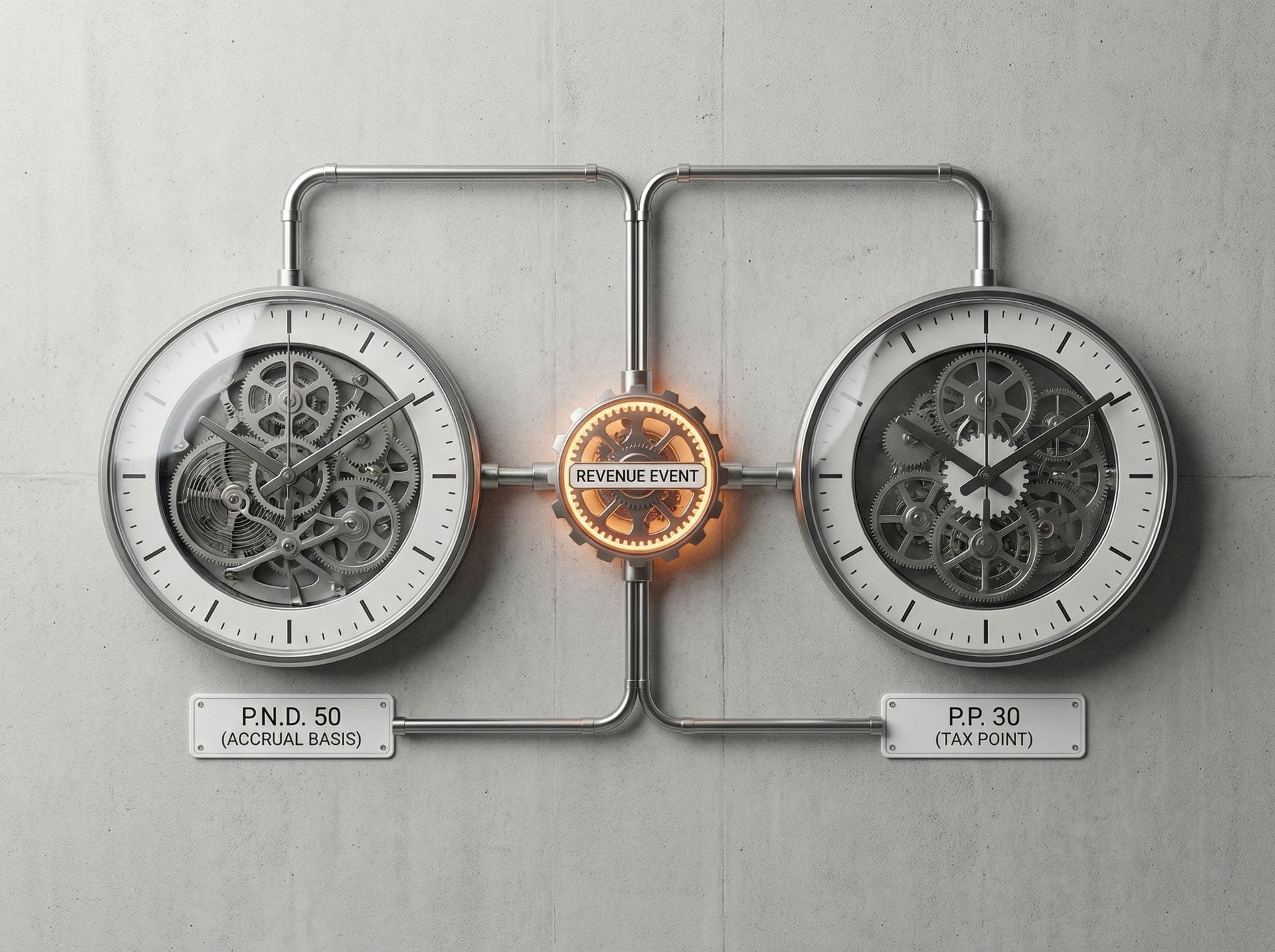
CIT vs VAT: Understanding Accrual Basis vs Tax Point - Critical Guide for Thai Business Owners
Corporate income tax uses accrual basis; VAT uses the tax point. Confusing them causes mismatches in ภ.ง.ด.50 vs ภ.พ.30 filings — this guide clarifies both.
Swipe to see more →
Ready to Take Action?
Our expert team is ready to help you achieve your financial goals. Contact us through your preferred channel.