Document Retention Requirements: Essential Guide to Accounting and Tax Compliance in Thailand
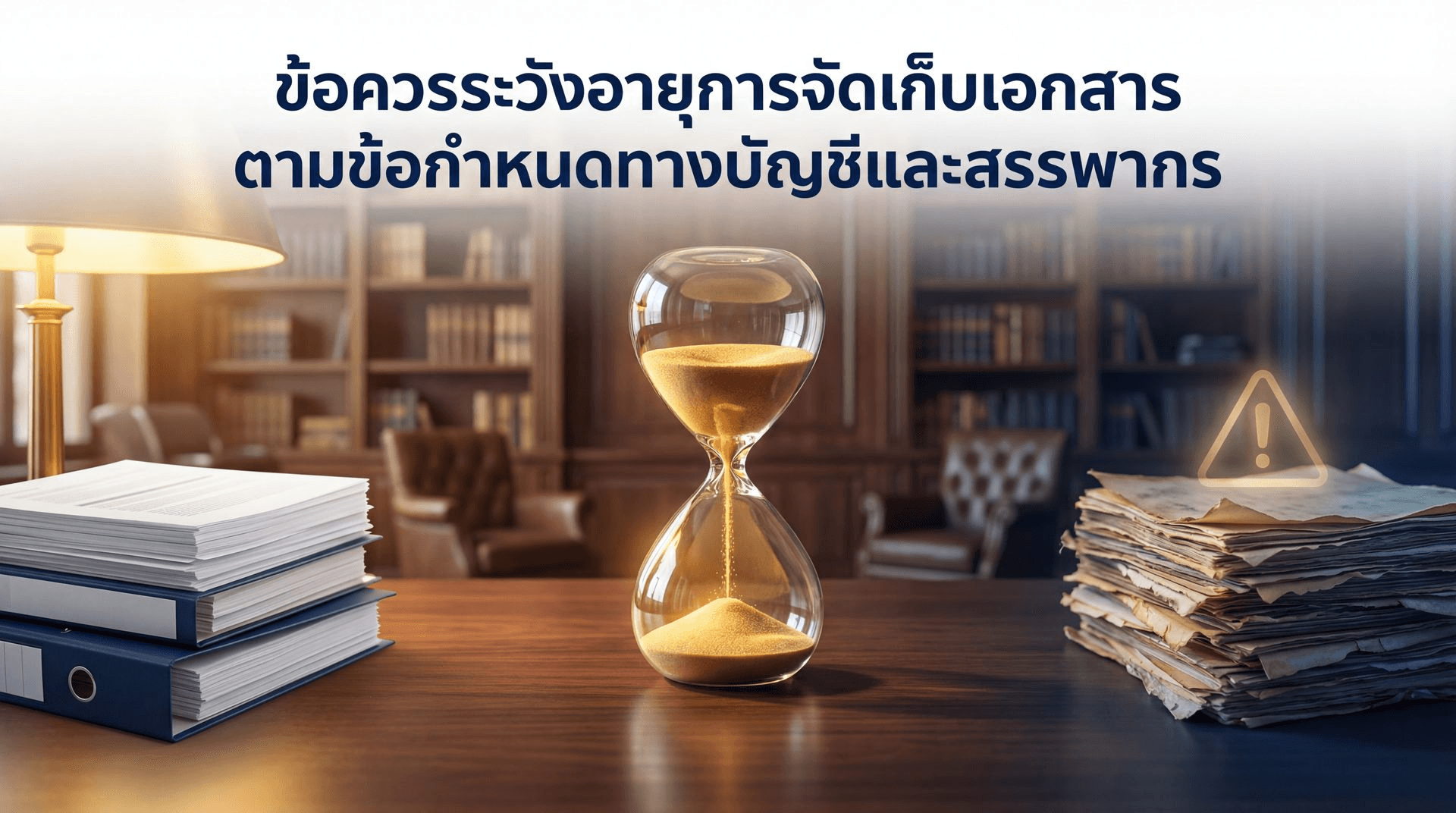
Article Content
Key Precautions for Document Retention Periods Under Accounting and Tax Regulations
For Thai SME business owners, properly maintaining accounting and tax documents in accordance with the law is extremely important - both to comply with accounting and tax laws and to prevent potential retroactive tax issues in the future. Documents such as accounting books, tax invoices, purchase-sale tax reports, tax returns, financial statements, withholding tax certificates, and others all have legally mandated retention periods. If neglected or destroyed prematurely, you may face fines or retroactive tax assessments that can damage your business.
This article will explain how accounting and tax laws mandate the retention period for each document type, complete with practical examples, to help SME business owners understand clearly.
How Long Does the Law Require Accounting and Tax Documents to Be Retained?
Many people wonder: how long must accounting and tax documents be kept? Can they be destroyed after several years have passed? Thai law has clear provisions on this matter. In summary: documents must be retained for at least 5 years as a minimum standard. There are detailed specifications under accounting and tax law as follows:
Accounting Act: Accounting Documents Must Be Retained for at Least 5 years
The Accounting Act for businesses (B.E. 2543/2000) clearly stipulates that business operators are required to retain accounting books and supporting documents for entries for no less than 5 years from the date of closing the books for that year to ensure information is readily available for subsequent audits, and the Director-General of the Department of Business Development has the authority to require retention beyond 5 years, but not exceeding 7 years when deemed appropriate (such as during investigations or exceptional cases).
Accounting documents in this context refer to both accounting books (such as journals, general ledgers) and supporting documents for accounting entries of all types used as evidence for recording transactions, whether originating from external parties or issued by the business itself, such as invoices, delivery notes, receipts/purchase tax invoices, sales tax invoices, petty cash vouchers, etc. These documents must be systematically stored at the business premises or other locations specified by law.
Example: ABC Company closes its fiscal year on December 31, 2022. According to the Accounting Act, the company must retain accounting books and supporting documents for fiscal year 2022 until at least the end of 2027 (5 years from the book-closing date) before considering destruction or transfer to relevant authorities.
Important Note: Failure to retain accounting books or supporting documents for the mandated 5-year period is a violation of the law and subject to fines. According to the penalties under the Accounting Act, failure to retain books/documents for the prescribed period (no less than 5 years) may result in a maximum fine of 5,000 baht. Furthermore, if accounting documents are lost or damaged, business operators are required to notify the Accounting Inspector (Department of Business Development) within 15 days of becoming aware of the loss/damage, or they may face fines or prosecution (false reporting may also result in imprisonment).
Revenue Code: Tax Documents Must Be Retained for at Least 5 Years
For tax documents (such as those related to Value Added Tax, corporate income tax, etc.), the Revenue Code provides consistent guidelines: tax documents must be retained for no less than 5 years from the date of filing the tax return or preparing the related report, as applicable. Specifically for the VAT system, the law specifies 5 essential document types that VAT-registered operators must retain: (1) Purchase tax invoices (originals), (2) Sales tax invoices (copies), (3) Purchase tax reports, (4) Sales tax reports, and (5) Goods and raw materials reports (for relevant operators). All of these must be kept for at least 5 years to enable retroactive audits as required by VAT law.
Additionally, the Director-General of the Revenue Department has the authority to require retention of these documents beyond 5 years, but not exceeding 7 years when deemed appropriate (such as during special investigations or retroactive tax audits), and there is an additional provision that if a business ceases operations, it must retain tax reports and related documents that were required to be kept on the date of cessation for an additional 2 years even after closure (to allow officials to audit if tax assessment is needed post-closure).
Example: XYZ Shop is VAT-registered and files its VAT return (Form Por.Por.30) for January 2025 on February 15, 2025. The shop must retain purchase-sale tax invoices and tax reports related to January 2025 until at least February 2030 (5 years from the filing date). If during this period the Revenue Department issues a special audit order, the shop may need to extend retention as specified (but not exceeding 7 years).
Retroactive Taxation: Business owners should be aware that generally the statute of limitations for retroactive tax assessment by the Revenue Department is 5 years if returns have been filed and taxes paid correctly and completely. However, in cases where tax returns were not filed or tax evasion occurred, the law allows the Revenue Department to audit retroactively for up to 10 years (referencing Civil and Commercial Code Section 193/31 which sets the tax collection statute of limitations at 10 years). Therefore, for maximum safety, it is recommended to retain accounting and tax documents for 10 years in all cases, even though accounting/tax laws mandate a minimum of 5 years, because if retroactive tax audits extend beyond 5 years, you will still have complete documentary evidence ready to explain.
Consequences of Non-Retention: Failure to comply with tax laws regarding document retention may cause problems during tax audits, such as retroactive tax assessments and surcharges due to the absence of documents proving those purchase/sale transactions or expenses. For example, if officials conduct an audit and the operator cannot present purchase tax invoices for certain expenses, officials have the authority to disallow input tax credits for those items, resulting in the company having to pay additional VAT plus penalty surcharges. Or in the case of corporate income tax, if there is no supporting expense documentation, officials may reassess tax values higher and demand retroactive tax payment including related penalties. Therefore, maintaining complete tax documentation serves as protection against unnecessary business losses and fines.
Note: For electronic document storage, current Thai law allows storage on electronic media instead of paper documents according to criteria and conditions specified in Revenue Department Order Tor.121/2545. While electronic document storage appears to be a better option than paper storage, we recommend consulting with your local Revenue Department office for assurance before deciding to store documents exclusively in electronic format.
Summary Table: Retention Periods for Accounting and Tax Documents
Below is a summary of legally mandated retention periods for various document types that business owners should know:
| Document Type | Required Retention Period | Legal Reference/Notes |
|---|---|---|
| Accounting books and supporting documents for entries (e.g., journals, ledgers, vouchers, receipts for various expenses) | At least 5 years from fiscal year-end (Not exceeding 7 years if extended by order) | Accounting Act B.E. 2543 Section 14 If documents are lost/damaged, must notify within 15 days |
| VAT reports (Purchase tax reports, sales tax reports, goods/raw materials reports) | At least 5 years from filing date or report date (Not exceeding 7 years if extended by order) | Revenue Code Section 87/3 If business ceases, retain for additional 2 years |
| Tax invoices (originals/copies) (Purchase and sales tax invoices) | At least 5 years from the invoice date (Not exceeding 7 years in special cases by order) | Revenue Code Section 87/3 Store in numerical and chronological order |
Recommendation: Retain all document types for 10 years for maximum safety, even though the law mandates 5-7 years, as the Revenue Department can audit retroactively for up to 10 years in some cases.
Frequently Asked Questions
To ensure clearer understanding, below are common questions and answers that business owners frequently have regarding the retention of accounting and tax documents:
Q1: How many years must accounting and tax documents be retained?
A: Generally, both accounting and tax documents should be retained for at least 5 years, as mandated by law. For example, accounting books and supporting documentation must be kept for 5 years from the fiscal year-end. Government agencies can extend the retention period up to a maximum of 7 years in certain cases. For maximum safety, it is recommended to retain documents for up to 10 years if possible, to accommodate cases where the Revenue Department conducts retroactive tax audits beyond 5 years (often occurring when taxes weren't filed or there are irregularities). In other words, keeping them longer is better than risking premature disposal and encountering problems later.
Q2: After the 5-year period expires, can documents be destroyed immediately?
A: If documents have passed the legally mandated period (5 years) and there are no outstanding disputes or audits, you can gradually destroy documents older than 5 years without needing to request permission from government agencies. Documents retained for 5-7+ years can be destroyed as appropriate. However, important precautions: (1) Ensure there is no pending tax audit notification from the Revenue Department. If under audit, do not destroy documents until the audit process is complete, and (2) You should create an internal record or inventory of documents destroyed as evidence for future reference if needed.
Q3: What should I do if accounting or tax documents are lost/damaged before the retention period expires?
A: The first thing to do is immediately notify the relevant agencies. In case of lost or destroyed accounting documents (e.g., fire, flood), those responsible for maintaining accounts must notify the Accounting Inspector (Department of Business Development) within 15 days of becoming aware of the incident. This notification creates an official record to prevent fines. Additionally, you should prepare a written explanation listing the lost/damaged documents with reasons and send it to the Revenue Department or inquiring agency (if the documents relate to taxes) to demonstrate transparency regarding the document loss. In practice, if you have other copies of documents (e.g., scanned copies, or counterparties still have copies of tax invoices), you should gather these as replacements and retain them for potential use during tax audits.
Q4: If a business ceases operations (closes company/partnership), must documents still be retained?
A: Yes, documents must continue to be retained for the period mandated by law, even after the business has ceased operations. Accounting and tax documents existing on the date of business cessation must be retained for at least an additional 2 years to allow officials to audit if tax assessment is needed post-closure. Furthermore, the Accounting Act states that upon ceasing business operations (in cases not involving liquidation), those responsible for maintaining accounts must submit all accounting books and supporting documents to the Accounting Inspector within 90 days from the cessation date. This means we should prepare all accounting documents for transfer to the Department of Business Development for continued storage. Tax-related documents should be retained in case the Revenue Department needs to audit after business cessation. During the 2 years following business cessation, if there are no issues, documents can then be considered for appropriate destruction.
Summary: Properly retaining accounting and tax documents for the legally mandated periods is a small matter that should not be overlooked because it protects your business from legal risks, including fines and retroactive tax assessments. A good document management system not only ensures comfortable compliance with the law but also improves business efficiency, making it easy and quick to locate various documents when needed. SME business owners should invest a small amount of time in organizing document storage systematically. This alone will make your business safer and smoother in the long run.
📚 Related Articles
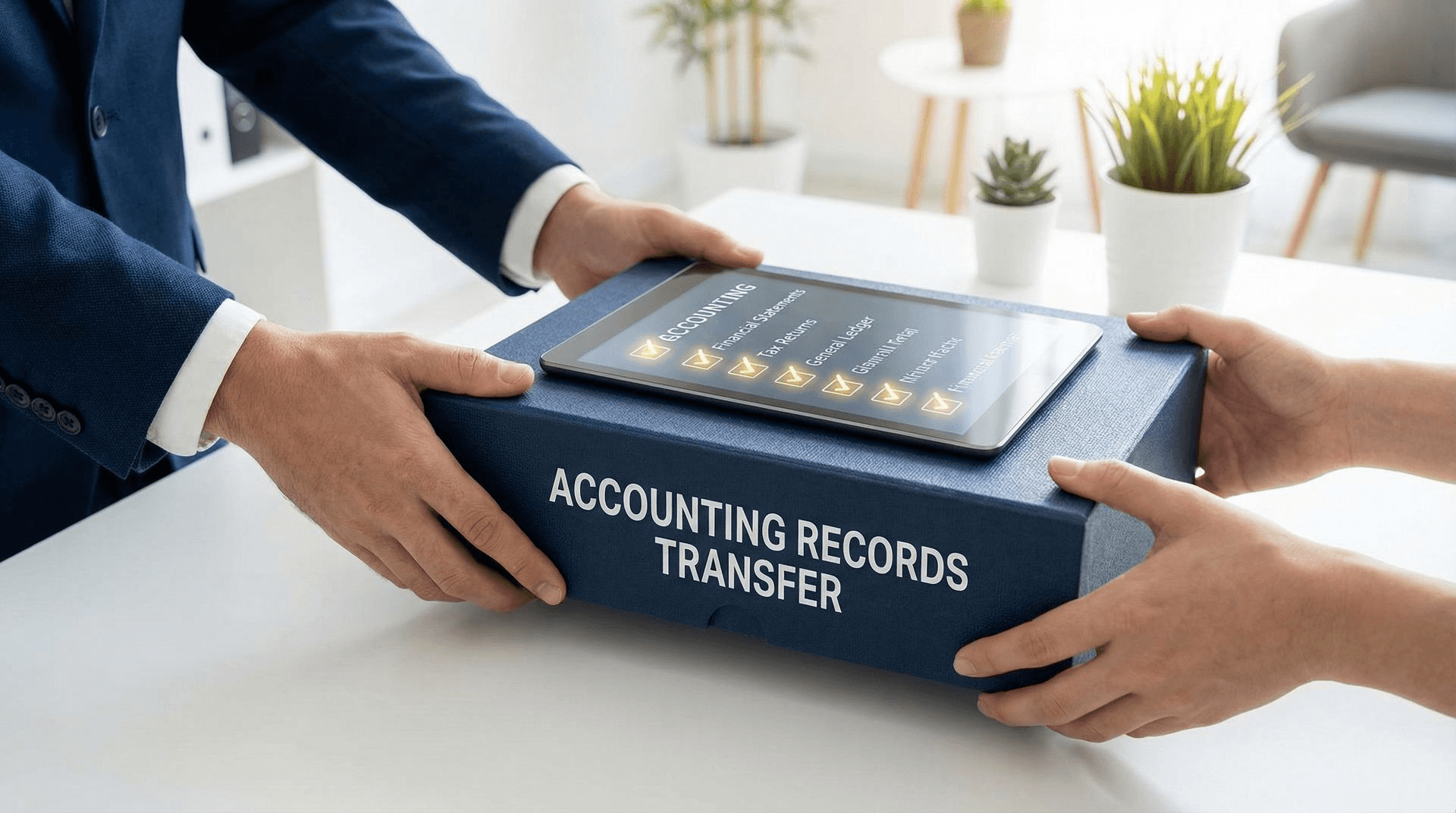
Changing Accounting Firms Mid-Year: Big Deal or Easy Task? (With Document Handover Checklist)
Switching accounting firms mid-year is straightforward if done right. This checklist covers documents to reclaim, handover steps, and tax-filing continuity.

Why Financial Statements Must Be Audited and Certified by Certified Public Accountants
Thai law requires financial statements to be audited by a licensed CPA (ผู้สอบบัญชีรับอนุญาต). Here's why it matters and what auditors actually check.
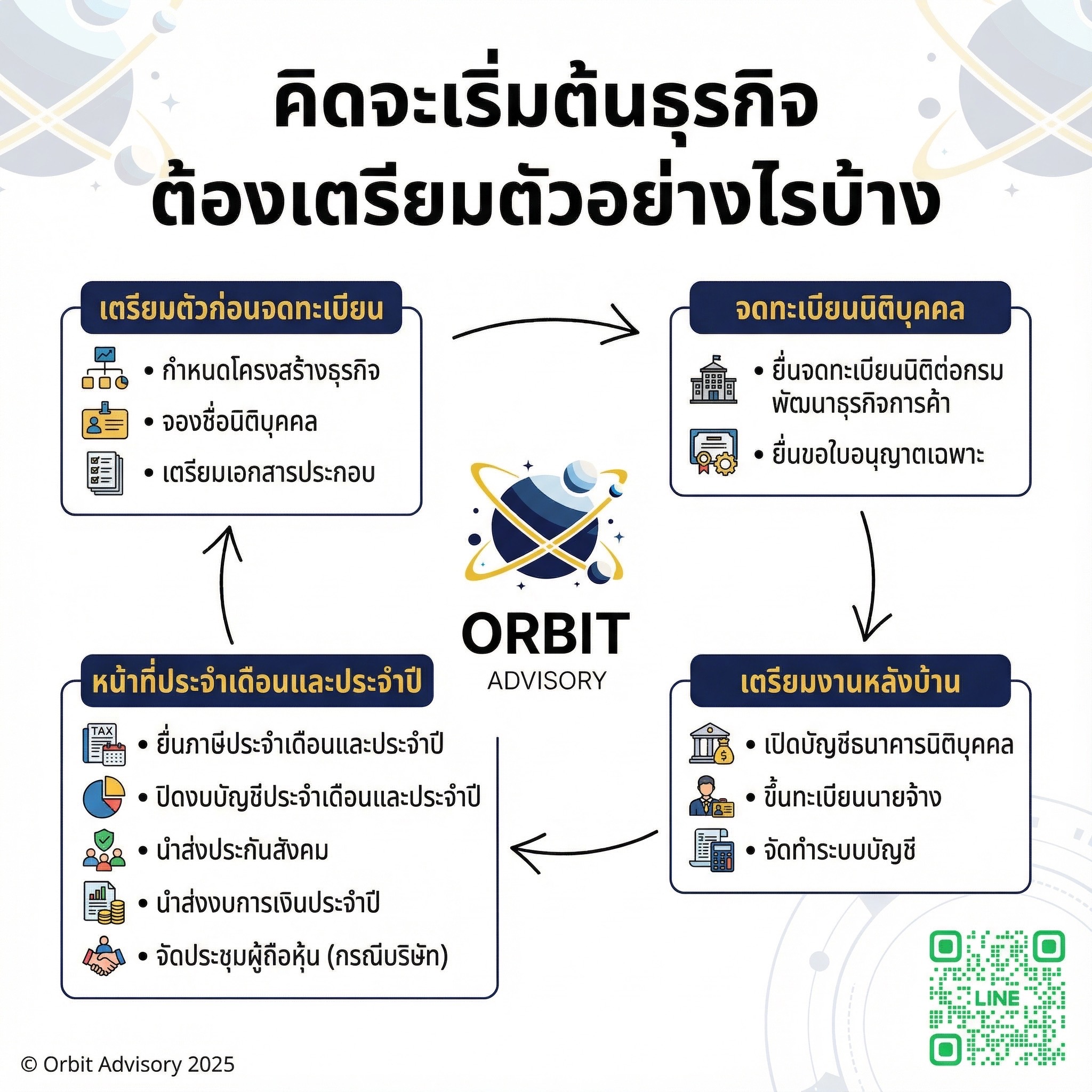
Complete Guide to Company Registration in Thailand: Steps, Documents, and Fees
Step-by-step guide to registering a company in Thailand: required documents, DBD process, fees, and first-year tax obligations.
Swipe to see more →
Ready to Take Action?
Our expert team is ready to help you achieve your financial goals. Contact us through your preferred channel.