5 Warning Signs You Should Change Your Accounting Firm (Before Facing Retroactive Taxes)
Article Content
Who Is This Article For?
This article is designed for SME business owners who are currently using external accounting services and wondering whether the quality of service they receive is adequate. If you've experienced accounting errors, poor communication, or are concerned about retroactive tax assessments, this article will help you identify warning signs and make the decision to change service providers before it's too late.
Why Should You Read This Article?
Choosing the wrong accounting firm can have serious consequences for your business, from retroactive tax assessments with penalties to losing opportunities for legitimate tax deductions. This article will help you:
- Identify 5 warning signs that indicate your accounting firm lacks professional standards
- Understand the risks of incorrect accounting and legal consequences
- Prepare to change service providers safely and correctly
- Select a new accounting firm with quality that meets SME business needs
Warning Signs You Should Change Your Accounting Firm

Many SME business owners entrust their accounting and tax matters to external accounting firms, thinking it will significantly reduce their workload. However, if the accounting firm you're using lacks standards or attention to detail, the resulting problems can be severe enough to trigger a Revenue Department audit and result in retroactive tax assessments.
Retroactive tax assessment means the Revenue Department reviews your taxes going back several years and demands payment of taxes plus penalties and surcharges, which can become an unmanageable burden. SME businesses without an accounting background should watch for the following warning signs. If any apply, you should consider changing your accounting firm before it's too late.
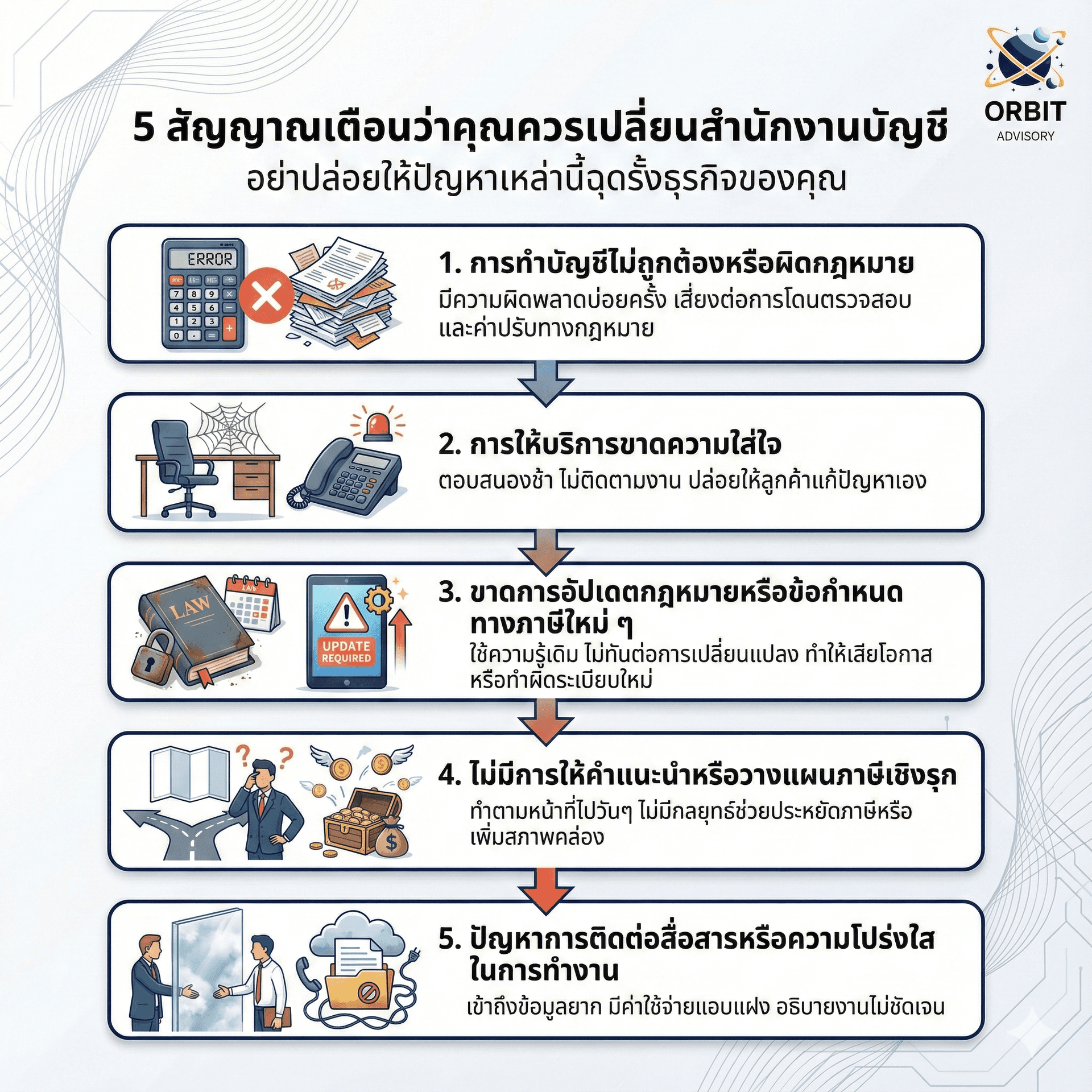
1. Incorrect or Illegal Accounting - Risk of Retroactive Tax Assessment
If your accounting firm frequently makes accounting errors, fails to keep complete records, or worse, recommends methods that violate the law (such as concealing income or issuing false documents), this is an extremely dangerous sign.
Filing taxes with incorrect information or deliberately evading taxes will not escape the Revenue Department's scrutiny. The Revenue Department can demand retroactive tax assessments when they discover taxpayers haven't paid taxes completely or filed incorrect information:
- 2-year retrospective review - General cases
- 5-year retrospective review - Suspicious circumstances of tax evasion
- 10-year retrospective review - Clear intent to evade taxes or never filed returns
Legal Penalties
The Accounting Act B.E. 2543 (2000) stipulates that accountants who fail to prepare accounts correctly and completely according to actual facts face penalties:
- Fine up to 10,000 baht - For incorrect accounting
- Imprisonment possible - For forgery or deliberately entering false records
⚠️ Important: As the business owner, you will be held legally responsible (executives who sign financial statements are deemed to have accepted those statements and cannot deny responsibility afterward)
Real-Life Example
Some accounting firms advise SMEs to "reduce" income in accounts to pay less tax. While the business may initially be happy about paying less tax, when the Revenue Department discovers discrepancies (such as reported income not matching reality or spending evidence), retroactive taxes plus massive penalties will follow, and the company must pay everything.
Advice
If your accounting firm proposes non-transparent shortcuts or makes regular accounting errors, that's a clear red flag. You should immediately look for a new service provider before the Revenue Department conducts a retroactive audit causing serious damage.
You should ask prospective accounting firms in advance:
- "What measures do you have to verify the accuracy of accounts and taxes before filing with the Revenue Department?"
- "Does your firm have auditors or tax advisors who review accuracy?"
Professional accounting firms will gladly explain their work processes transparently and strictly comply with the law.
2. Careless Service That Doesn't Meet Business Owner Needs
Good service must come with attention to detail and understanding of customer needs. If your accounting firm works perfunctorily, doesn't collect details, or ignores your business's specific problems, this is another sign you shouldn't overlook.
According to professional ethics, accountants must perform duties with Professional Competence and Due Care according to relevant professional standards.
Signs of Lack of Attention
- Frequently records entries in wrong categories
- Reports incorrect numbers
- Files returns late without valid reasons
- Must constantly follow up on work yourself
- Sends documents but work doesn't progress, requires multiple follow-up calls
- Inquiries about accounting/tax information don't get clear responses
These situations create hassle and discomfort for business owners, because accounting work should be something professionals handle efficiently, not adding to your burden by requiring constant prodding at every step.
Advice
If you feel your current accounting firm doesn't "care" about your business as much as they should, try scheduling a conversation to ask if there are any problems or obstacles. If there's no improvement, it's time to consider changing service providers.
When selecting a new firm, ask:
- "Will we have a dedicated account manager?"
- "What communication channels are available, and can we reach someone immediately in emergencies?"
A good accounting firm should clearly designate who is responsible for each client, respond to questions quickly, and be ready to adapt services to suit each client's business characteristics.
3. Lack of Updates on New Tax Laws or Regulations
Tax laws and regulations change constantly, whether it's tax rates, deduction measures, or new government policies. A good accounting firm must follow news and update this information to adjust their work and inform entrepreneurs about things that may impact their business.
If your accounting firm never shares news or adjusts their methods according to new regulations, that's a sign the team may lack knowledge development.
Legal Requirements
Accountants must continuously develop their knowledge:
- Training of at least 12 hours per year
- Additional professional ethics training annually
Examples You Might Miss
- Investment promotion tax measures - Additional tax deduction rights that SMEs miss out on tax savings
- e-Tax Invoice/e-Receipt regulations - Government starting to enforce, failure to prepare may result in legal violations unknowingly
Advice
Accounting firms should act as a "radar" scanning for changes in tax laws for your business.
You might ask prospective accounting firms:
- "How does your firm inform clients about new laws or news?"
- "When did your team last attend training or courses to enhance accounting and tax knowledge?"
Professional accounting firms usually send newsletters or emails to inform clients when there are relevant new laws and immediately adjust their work to comply with those laws.
4. No Advice or Proactive Tax Planning
Tax planning means managing taxes efficiently according to law to ensure businesses pay only necessary taxes, not evading taxes.
If your accounting firm only receives documents–records entries–files taxes month by month without ever proposing tax management methods or any deduction approaches, you may be losing benefits or paying more tax than necessary.
Government Supports Tax Planning
"Tax planning is not tax fraud or tax evasion, but planning to pay the least tax legally as prescribed by the Revenue Department"
Tax Planning Examples
- Advise what additional investments should be made this year to claim deductions
- Calculate estimated profits in advance to reserve money for tax payments
- Study changes in tax rates each year in advance
- Prepare appropriate tax planning for the situation
If your accounting firm never discusses these matters with you, they're likely not functioning as a proactive tax advisor for your business as they should.
Advice
Before deciding to change accounting firms, look for an "accounting/tax advisor" with a proactive mindset. They will help you see the big financial picture of your company and plan taxes in advance better.
When talking with a new accounting firm, you should ask:
- "Does your firm provide tax planning services or advice on tax deductions during the year?"
- "At year-end, will there be a meeting to summarize the budget and assess tax burden before actual filing?"
These questions will distinguish accounting firms that work proactively from those that just submit homework day by day.
5. Communication Problems or Lack of Transparency in Work
Transparency and good communication are the foundation of trust between entrepreneurs and accounting firms.
Signs of Communication Problems
- Calls or messages go unanswered for extended periods
- Documents sent are not acknowledged as received
- Appointments made but staff frequently doesn't show up
- Doesn't send copies of filed tax returns
- Doesn't provide tax payment receipts
- Doesn't explain financial statement numbers straightforwardly
Real-Life Situations
Case 1: Some business owners hire accounting firms to file returns and pay taxes on their behalf, but the accounting firm never sends receipts or proof of tax payment back for verification. This leaves the entrepreneur uncertain whether taxes were actually submitted, until later discovering some taxes weren't paid and penalties accrued for late filing.
Case 2: The accounting firm refuses to send financial statements or accounting reports for executives to review, claiming work is complete but "the system has problems" so details can't be viewed. Later verification reveals numerous incorrect figures, showing the financial statements weren't properly reviewed from the start.
Advice
Transparency starts from clearly agreeing on service fees through to delivering work on time. You should know the status of your company's accounting work at all times.
When contacting a new accounting firm, observe from the quotation stage whether they clearly explain scope of work and costs.
Should ask additionally:
- "Does your firm report progress in accounting work to clients, such as summarizing work done each month?"
- "When taxes are paid or returns filed, will you send proof of receipts or copies of filed tax returns to us?"
If the other party gives vague, unclear answers or has no policy for clients to keep evidence, you should consider looking elsewhere because transparency is non-negotiable in accounting work.
Preparing Before Changing Accounting Firms
If you've found one or more of the above signs in your current accounting firm, don't wait until damage occurs to change. You should promptly proceed to change your accounting service provider with appropriate preparation.
1. Notify Old Accounting Firm and Prepare Complete Documents
You should politely notify termination to the existing accounting firm and request return of all accounting documents completely:
- Account books
- Purchase-sale tax reports
- Financial statements
- Retroactive tax filing evidence
Verify that no important documents are left behind with the old firm.
2. Review Retroactive Accounting and Tax Status
Before handing work to the new accounting firm, you should verify or have experts help check financial statements and tax returns for at least the past 1-2 years for errors or outstanding tax liabilities.
If problems are found, you can urgently correct or explain to the Revenue Department before transferring all work to the new firm.
3. Select a Reliable New Accounting Firm
Look for accounting firms with:
- Licensed accountants (CPD)
- Licensed auditors (CPA)
- Recognition as a "Quality Accounting Office" from the Department of Business Development
Additionally, you should verify reviews or inquire with other clients of that firm to inform your decision.
4. Inquire About Service Details in Advance
To ensure the new accounting firm will address all 5 problems you've encountered, try asking these questions before deciding to hire:
- How does your team verify the accuracy of accounts and taxes before actual submission?
- To ensure errors won't recur
- Does your accounting firm track and alert clients about new laws or tax measures?
- See attention to knowledge updates
- Does your firm provide tax planning for client businesses or advice to reduce tax deductions?
- Assess advisory capabilities
- What are the communication channels, and do we have a dedicated account manager we can contact directly?
- To ensure convenient contact when problems arise
- When tax filing or important work is complete, does your firm send evidence or confirmation reports back to us?
- Test transparency in work
- How do you charge for services, are there hidden costs beyond monthly accounting fees?
- To prevent unclear charges later
Conclusion
Changing accounting firms may seem troublesome in the short term, but if you've found these warning signs, changing is an investment in your business's long-term stability.
A good accounting firm will help your business:
- Keep accounts correctly and transparently
- Plan taxes appropriately
- Reduce risks of retroactive tax assessments or penalties
- Focus fully on business operations
Remember that entrepreneurs have a duty to prepare accounts and pay taxes correctly and completely every year. Having an expert and trustworthy partner by your side will allow you to focus on running your business without worrying about retroactive tax issues.
📚 Related Articles
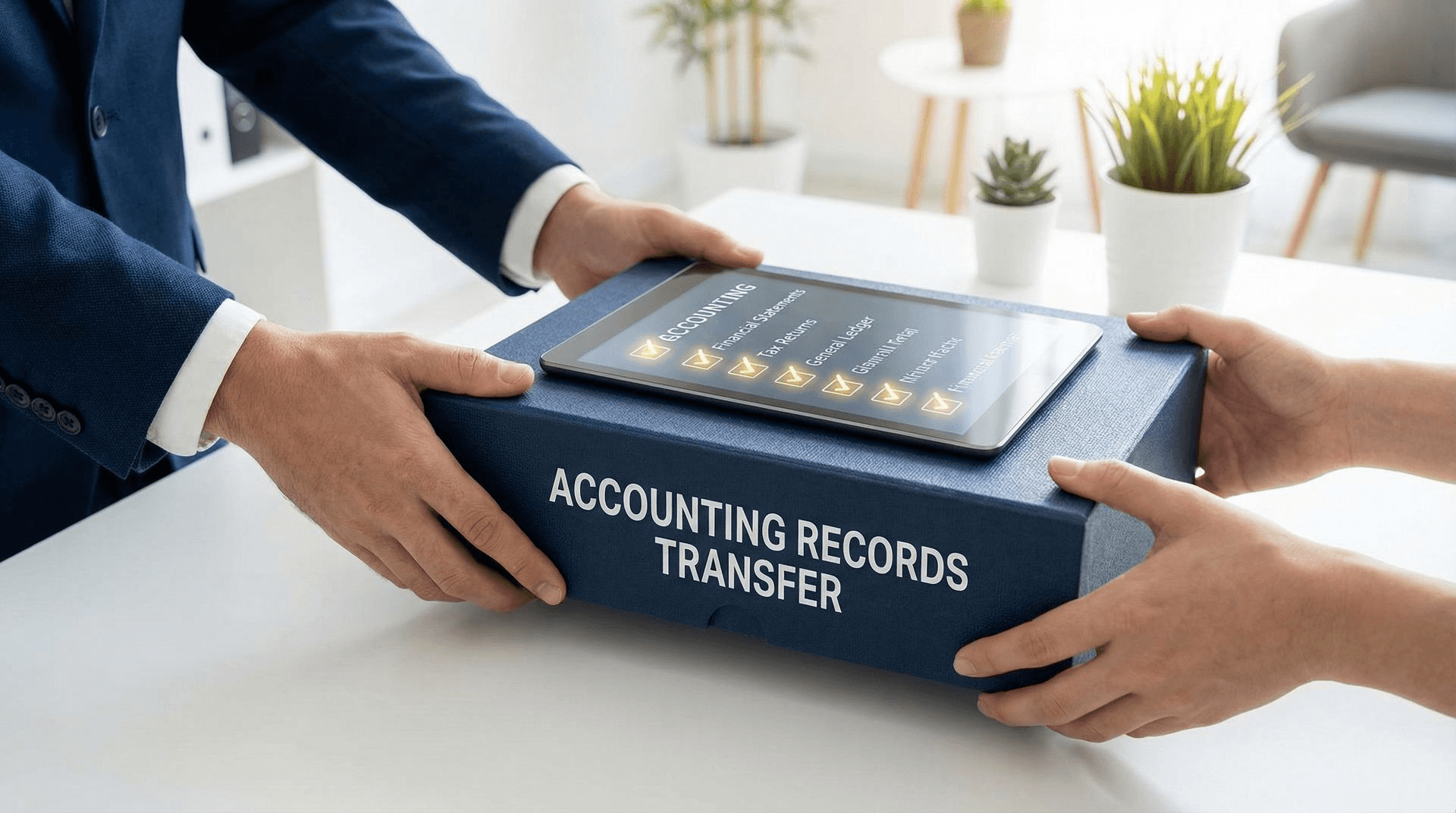
Changing Accounting Firms Mid-Year: Big Deal or Easy Task? (With Document Handover Checklist)
Switching accounting firms mid-year is straightforward if done right. This checklist covers documents to reclaim, handover steps, and tax-filing continuity.

Why Financial Statements Must Be Audited and Certified by Certified Public Accountants
Thai law requires financial statements to be audited by a licensed CPA (ผู้สอบบัญชีรับอนุญาต). Here's why it matters and what auditors actually check.

Complete Guide to Company Registration in Thailand: Steps, Documents, and Fees
Step-by-step guide to registering a company in Thailand: required documents, DBD process, fees, and first-year tax obligations.
Swipe to see more →
Ready to Take Action?
Our expert team is ready to help you achieve your financial goals. Contact us through your preferred channel.